BRIDGES/ARTIFACTS/KAMINOS DE LA LENGUA
A Ladino memory journey from Greece – Exhibition Overview
This exhibition project offers a rigorous and evocative exploration of Ladino and Sephardic culture in Greece, tracing its historical trajectories, linguistic richness, and contemporary resonances. Conceived for museums, universities, embassies, and cultural foundations, it combines scholarly precision with an immersive visitor experience, foregrounding voices, memories, and artistic expressions that have shaped Sephardic life in the Greek context.
At its core, the exhibition examines the evolution of Judeo-Spanish (Ladino) and Sephardic traditions from their post-1492 arrival in the Eastern Mediterranean to the present. Through archival materials, personal testimonies, soundscapes, and contemporary artworks, it illuminates the cultural vitality of communities in cities such as Thessaloniki, Ioannina, and Athens, while addressing the rupture of the Holocaust and the challenges of postwar remembrance. The project underscores Ladino as both a language of everyday life and a vehicle of poetry, music, and ritual, situating it within broader European and Mediterranean histories.
The exhibition's objectives are threefold: to document and interpret Sephardic cultural heritage in Greece with academic rigor; to foster critical reflection on memory, loss, and resilience; and to encourage intercultural dialogue on minority cultures and multilingualism. Visitors encounter carefully curated thematic sections that weave together historical documents, photographs, sound recordings, and artistic interventions, enabling them to experience Ladino not only as an object of study but as a living, affective presence. Clear interpretive texts, bilingual materials, and programmatic activities (lectures, guided tours, and workshops) support both specialist and general audiences.
Throughout the exhibition, visitors move through an atmosphere that is at once contemplative and sensorial. Sound installations evoke Ladino songs and spoken testimonies; visual works reinterpret archival fragments and family photographs; and spatial design elements suggest domestic, urban, and ritual environments. This integrated approach highlights the uniqueness of the project: it does not merely present Sephardic culture as a historical chapter, but as a dynamic field of artistic and intellectual engagement. The exhibition thus serves as a platform for renewed attention to Ladino and Sephardic heritage in Greece, inviting institutions and audiences to participate in its preservation, study, and creative reimagining.
This exhibition project offers a rigorous and evocative exploration of Ladino and Sephardic culture in Greece, tracing its historical trajectories, linguistic richness, and contemporary resonances. Conceived for museums, universities, embassies, and cultural foundations, it combines scholarly precision with an immersive visitor experience, foregrounding voices, memories, and artistic expressions that have shaped Sephardic life in the Greek context.
At its core, the exhibition examines the evolution of Judeo-Spanish (Ladino) and Sephardic traditions from their post-1492 arrival in the Eastern Mediterranean to the present. Through archival materials, personal testimonies, soundscapes, and contemporary artworks, it illuminates the cultural vitality of communities in cities such as Thessaloniki, Ioannina, and Athens, while addressing the rupture of the Holocaust and the challenges of postwar remembrance. The project underscores Ladino as both a language of everyday life and a vehicle of poetry, music, and ritual, situating it within broader European and Mediterranean histories.
The exhibition’s objectives are threefold: to document and interpret Sephardic cultural heritage in Greece with academic rigor; to foster critical reflection on memory, loss, and resilience; and to encourage intercultural dialogue on minority cultures and multilingualism. Visitors encounter carefully curated thematic sections that weave together historical documents, photographs, sound recordings, and artistic interventions, enabling them to experience Ladino not only as an object of study but as a living, affective presence. Clear interpretive texts, bilingual materials, and programmatic activities (lectures, guided tours, and workshops) support both specialist and general audiences.
Throughout the exhibition, visitors move through an atmosphere that is at once contemplative and sensorial. Sound installations evoke Ladino songs and spoken testimonies; visual works reinterpret archival fragments and family photographs; and spatial design elements suggest domestic, urban, and ritual environments. This integrated approach highlights the uniqueness of the project: it does not merely present Sephardic culture as a historical chapter, but as a dynamic field of artistic and intellectual engagement. The exhibition thus serves as a platform for renewed attention to Ladino and Sephardic heritage in Greece, inviting institutions and audiences to participate in its preservation, study, and creative reimagining.
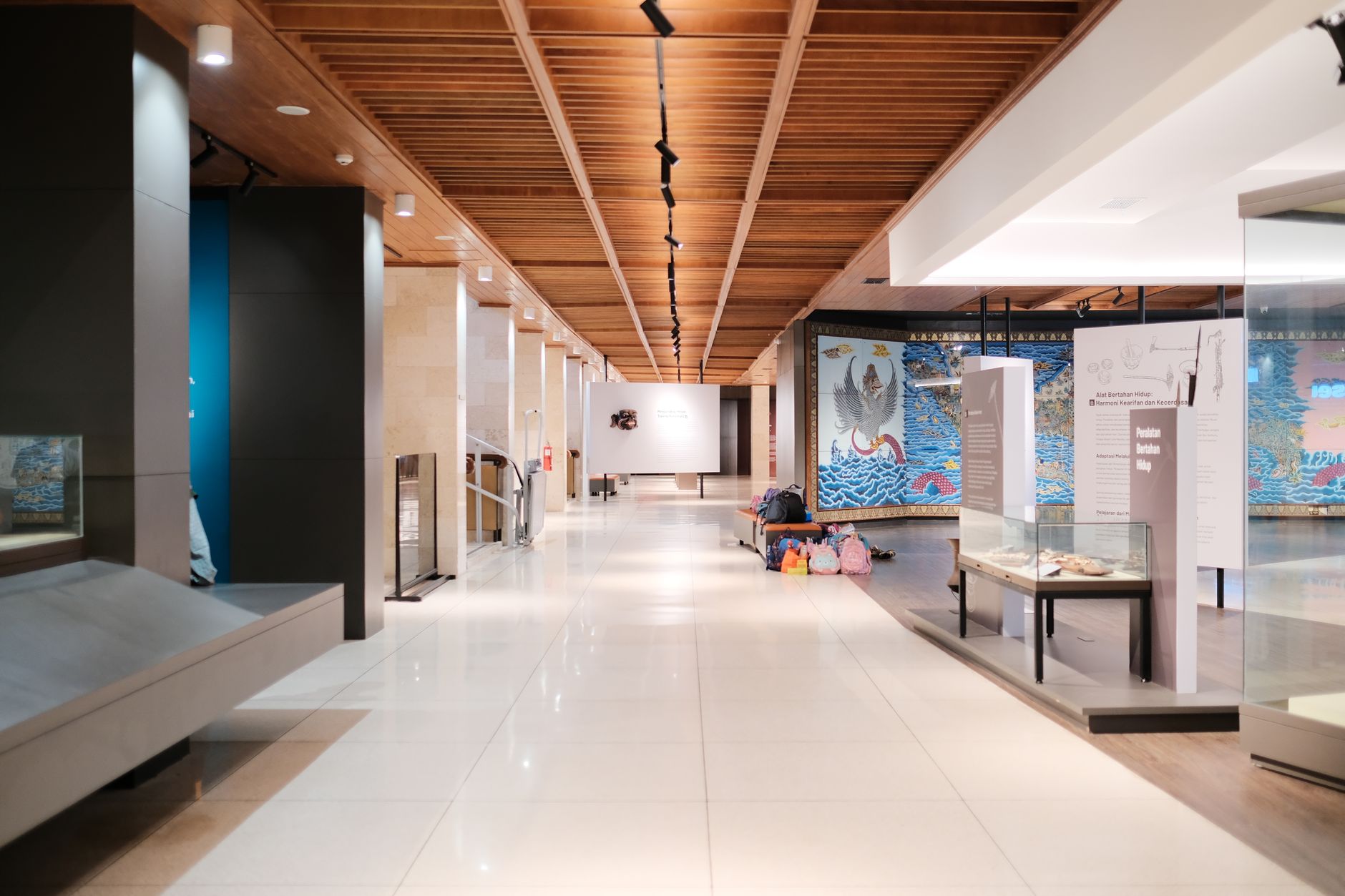
Space reserved for key photos: 1–2 large, high-resolution images should be placed here, visually conveying the exhibition’s atmosphere. Suggested images include: a wide shot of the exhibition space with visitors engaging with multimedia installations and wall texts; and a close view of a central artwork or display case combining archival documents, family photographs, and Ladino-language materials, under carefully designed lighting that emphasizes both intimacy and scholarly presentation.

Exhibition Curator
Angela Arbeláez is an art historian and curator specializing in contemporary and cross-cultural visual practices. She holds an MA in Fine Arts History from from the University of Moscow Lomonosov. Her research focuses on visual narratives of memory, migration, and identity, and she has published widely in peer-reviewed journals and exhibition catalogues. Alexandra has lectured at universities across Colombia, and has been invited as a keynote speaker and panelist in Greece and at international symposia and conferences as well key speaker to the Faculty of Jewish Studies of the Miami University.
Over the past two decades, she has curated major exhibitions for museums and independent art spaces in Vienna, Berlin, Warsaw, and Istanbul, often working with interdisciplinary teams and artists from diverse cultural backgrounds. For this exhibition, her curatorial vision is to create a rigorous yet accessible framework that foregrounds artists’ voices while situating their work within broader historical and social contexts. She aims to foster dialogue between local and international perspectives, encouraging visitors to question established narratives and discover new connections across cultures, media, and generations.

Advisory Committee
The Scientific Committee plays a central role in ensuring the intellectual rigor, methodological soundness, and overall quality of the exhibition. Composed of distinguished scholars and professionals, the Committee oversees the conceptual framework, validates the accuracy of the content, and advises on the selection of works and materials. Through regular consultation and peer review, its members guarantee that the project reflects current research, adheres to high ethical standards, and offers visitors a reliable and thought‑provoking experience.
Gabriel Negrin, Rabbi of Athens. Maria Rossi, Chair of the Scientific Committee and Full Professor of Contemporary Art History at the University of Milan, brings extensive expertise in curatorial studies and museum practices. She oversees the overall scientific coherence of the exhibition and coordinates the contributions of the other committee members.
Dr. Shai Cohen James Thompson, Senior Research Fellow in Digital Humanities at King’s College London, specializes in the use of digital tools for cultural heritage interpretation. He advises on the integration of interactive media, data visualization, and online resources, reinforcing the international and innovative character of the project.
Professor Amina El‑Sayed, Professor of Cultural Anthropology at the American University in Cairo, contributes her expertise in cross‑cultural communication and audience studies. She ensures that the exhibition narrative is inclusive, sensitive to diverse perspectives, and accessible to a broad public, highlighting the interdisciplinary dialogue between the social sciences and the arts.
Dr. Lukas Schneider, Curator of Science and Society Programs at the Deutsches Museum in Munich, is a specialist in the history of science and technology. He focuses on the accurate presentation of scientific concepts within the exhibition and supports the development of educational materials for schools and universities.
Dr. Sofia Almeida, Associate Professor of Museum Education at the University of Lisbon, brings a strong background in learning theory and visitor engagement. She advises on interpretive strategies, mediation tools, and public programs, ensuring that the exhibition fosters meaningful learning experiences for different age groups and backgrounds.
Together, the members of the Scientific Committee form an interdisciplinary and international body that combines art history, anthropology, digital humanities, science communication, and museum education. Their complementary expertise strengthens the exhibition’s scientific foundations and guarantees a rich, multifaceted approach to the themes explored.
Institutional Framework & Support
Under the Auspices
The exhibition is envisioned under the auspices of high-level public and cultural institutions such as ministries of culture and foreign affairs, national and regional embassies, cultural institutes, and leading universities or research centers. These bodies typically endorse the project formally, recognizing its alignment with national cultural policy, international dialogue, and academic excellence.
Such auspices signal that the exhibition meets rigorous standards of quality, relevance, and integrity. They enhance the project’s prestige, strengthen its international visibility, and reassure visitors, partners, and the media that the exhibition is professionally curated, responsibly managed, and embedded in a respected institutional context.
Partners & Sponsors
Alongside auspicing institutions, the exhibition is supported by a network of partners and sponsors who contribute cultural, academic, financial, and logistical resources. Cultural and academic partners may provide curatorial expertise, research, public programs, and educational materials, ensuring that the exhibition is intellectually robust and accessible to diverse audiences.
Financial and logistical sponsors help secure production costs, transport and insurance of artworks, venue preparation, communication, and visitor services. Their support enables a higher overall standard of presentation, extended opening hours, and inclusive programming, while maintaining the independence and curatorial integrity of the project.
Logos & Visual Recognition
Logos of auspicing institutions, partners, and sponsors will be displayed in a dedicated horizontal band beneath this text, grouped by category (auspices, partners, sponsors) and aligned for visual balance. This logo area will also be mirrored in printed materials and digital communication to ensure consistent and prominent recognition.
Call to Action
Join us in shaping this exhibition.
This section formally presents the institutional ecosystem that makes the exhibition possible, emphasizing transparency, accountability, and shared values. It highlights how public authorities, diplomatic missions, cultural organizations, and academic institutions collectively endorse the project’s mission to foster cultural exchange, critical reflection, and public engagement.
By articulating the roles of partners and sponsors, the exhibition acknowledges the diverse forms of support that underpin its realization, from scholarly collaboration and content development to funding, logistics, and outreach. This framework invites additional institutions and visitors to engage, collaborate, and contribute to the long-term impact of the exhibition.